Last updated: July 2026
Story Compass
Four questions that point your story at a reader.
Most writers learn what their story does to a reader after it is finished. They write it, hand it over, and wait to hear. By then the aim is set — whatever the story does, it does.
Story Compass reverses that order. One question for each direction, answered before you write a word. Together they describe a person standing on your last page: what they feel, what they say about it, what they carry off, and who they became on the way there. That is your destination. Story development is the route.
North — Emotion
“How do they feel as the cover closes?”
Name one feeling and commit to it. “Moved” tells you nothing. “Relieved, and ashamed of the relief” tells you what to build. From there, every scene either earns that feeling or spends it.
South — Achievement
“What do they praise?”
Readers hand a story on in one sentence. Write that sentence now, in their words, and you find out what you are building — the turn, the ending, the character they cannot shake. If you cannot hear the sentence, your reader will not find it.
East — Application
“What do they carry into their life?”
A story leaves something behind — a question the reader turns over at a red light, a habit they try on, permission they did not have on page one. Decide what that is. A story that changes nothing about Monday morning is entertainment, and there is no shame in that. If you want more, aim for it.
West — Transformation
“What changed in them?”
Your protagonist is not the only one with an arc. The reader arrives holding a belief and leaves with it bent, confirmed, or broken. Name the before and the after. This is the hardest direction to answer, and the one that separates a story people finish from a story they hand to someone else.
How to use it
Answer North first. Feeling governs — the other three directions bend toward it. Then South and East, which test whether the feeling survives contact with the reader’s own life. Save West for last; it is the sum of the other three.
Fill it in before the outline, not after. When a scene fights you three months from now, come back to the compass. A dead scene is almost always pointing somewhere you never chose.
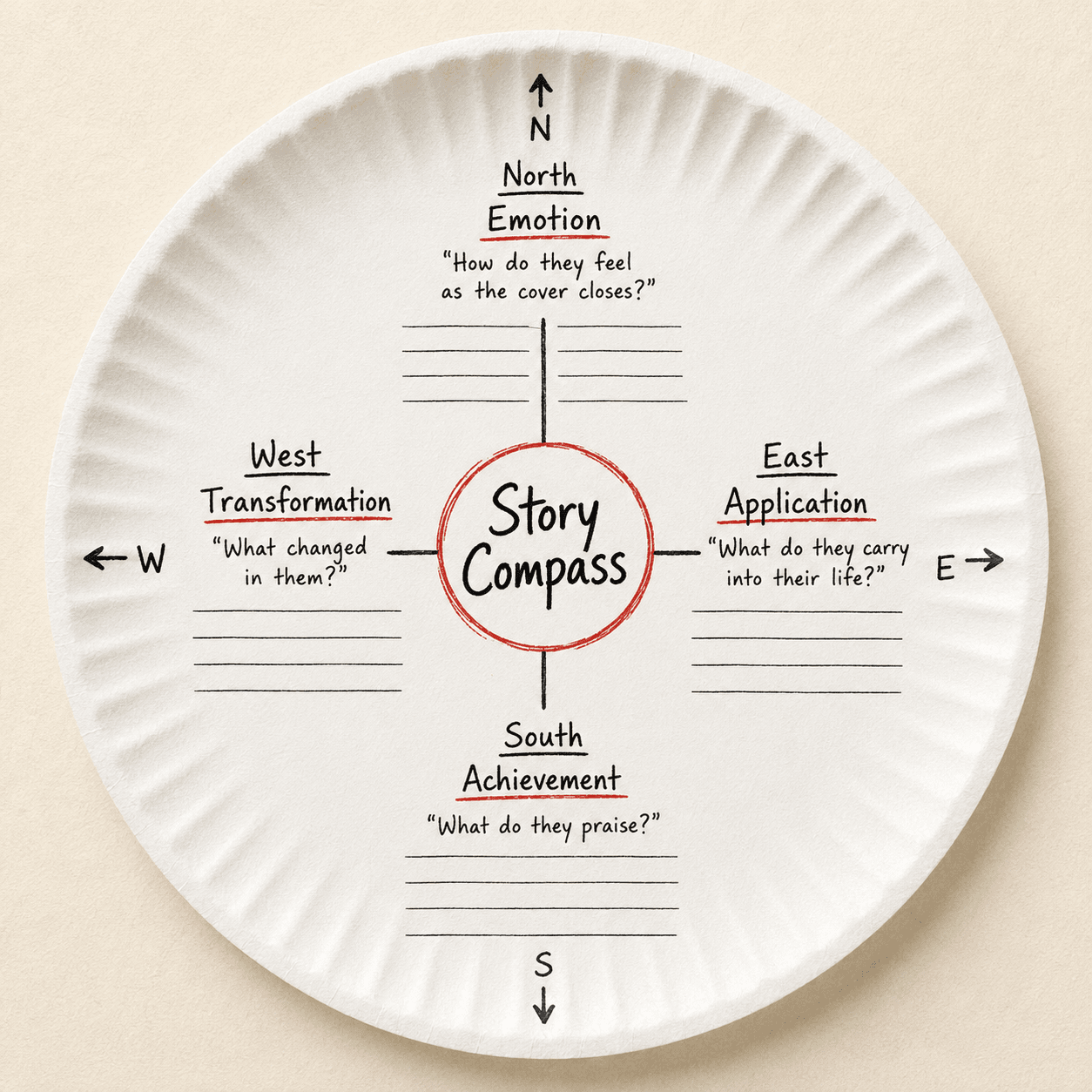
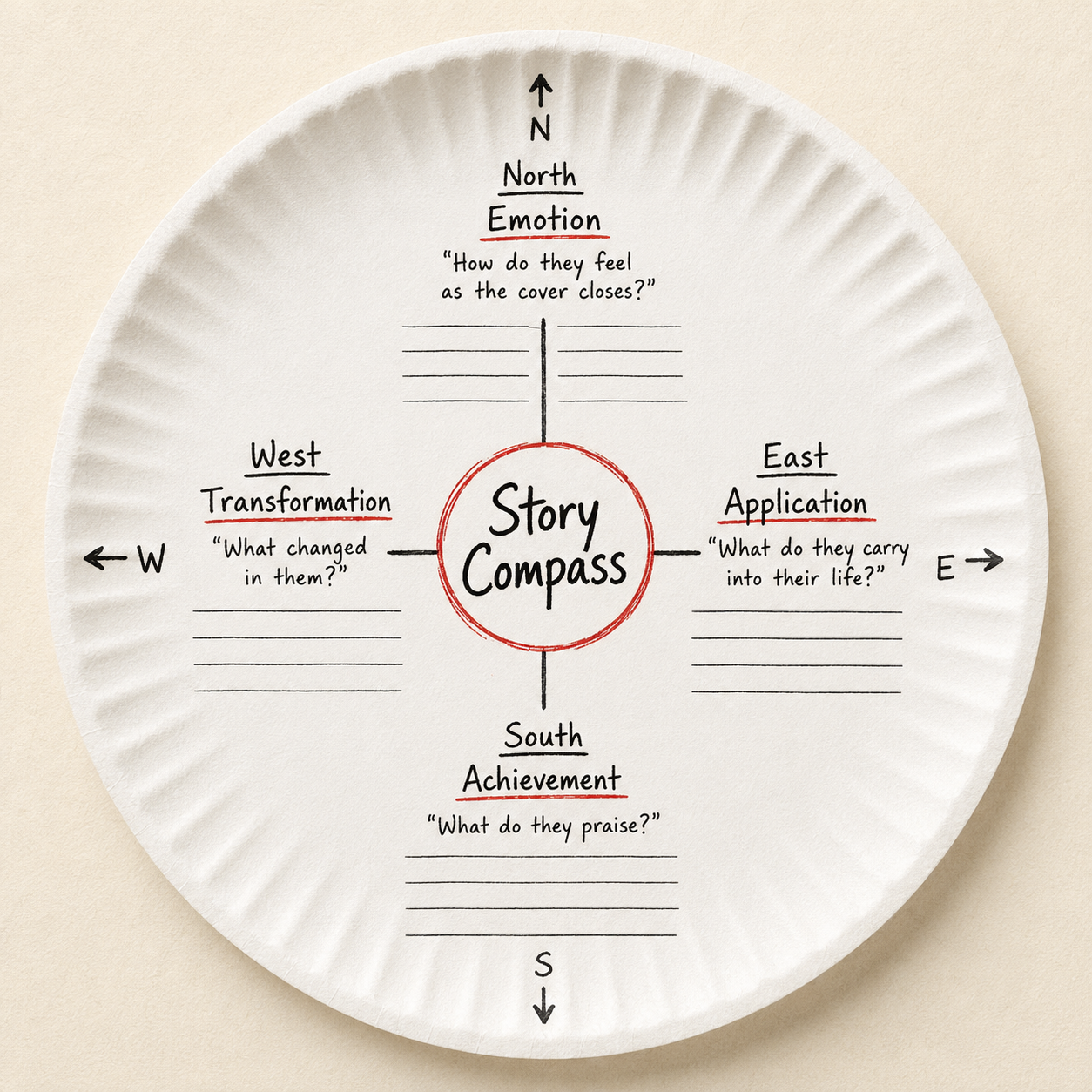
Starting a new story? Print it, answer the four directions, and keep it where you can see it.
Ready to build the route? Try the tools in Stop Writing!